We’re delighted to share the first three workshops in our 2026 arts-based workshop series, connected to Wildfires at the Art–Science Interface and the EDI Working Group. Running across the year, this series will use creative methods to explore our research, reflect on our EDI values, and think differently about how we communicate and collaborate.
Each workshop is designed and led by an experienced external practitioner, and we hope the series will offer a refreshing and inspiring way to think, reflect and tap into your own creativity.
In summary the workshops are:
- Workshop 1: Soundscapes with Forestscapes Workshop with Jonathan Gray, Liliana Bounegru and Andrés Saenz de Sicilia. Date: March 25 , Time: 9:30-12:30. Location: King’s Strand KIN LG137 – in person only (previously we stated there was an online option however this is not the case)
- Workshop 2: Creative Writing with Dr Victoria Leslie. Date: April 22 Time: 9:30-12:30 (with lunch at 12:30). Location: King’s Melbourne House
- Workshop 3: Experimental Embroidery with Elnaz Yazdani. Date: June 26. Time: 13:00-16:00 (with lunch at 12:30). Location: King’s Melbourne House- in person only
Open to Centre members and Affiliates. Please check your emails or contact Adriana Ford/Mia Griffin.
Workshop 1: Soundscapes Workshop with Forestscapes
-
Date: REARRANGED to 31st March
-
Time: 13:00-16:00
-
Location: East Wing (room 2.13, Strand Campus | King’s College London (In-person only)
About the Practitioners
Forestscapes. How can soundscapes be used as a way to attend to forest life and the many different ways of narrating and relating to forests, forest issues and forest protection and restoration efforts? The forestscapes project aims to explore and document generative arts-based methods for recomposing collections of sound materials to support “collective inquiry” into forests as living cultural landscapes. More details here: https://publicdatalab.org/projects/forestscapes/
Jonathan W. Y. Gray (@jwyg) explores the roles of digital data, methods and infrastructures in shaping how we know and live together. He is the author of Public Data Cultures (Polity, 2025). At King’s College London, he is Reader in Critical Infrastructure Studies at the Department of Digital Humanities and Co-Director of the Centre for Digital Culture. He is also co-founder of the Public Data Lab; research associate at the Digital Methods Initiative (University of Amsterdam) and the médialab (Sciences Po, Paris); and has taught with the School for Poetic Computation in NYC. More about his work can be found at jonathangray.org.
Liliana Bounegru is Senior Lecturer (Associate Professor) in Digital Media, Culture and Society at the Department of Digital Humanities, King’s College London. She is also co-founder of the Public Data Lab and affiliated with the Digital Methods Initiative in Amsterdam and the médialab, Sciences Po in Paris. More about her work can be found at lilianabounegru.org. You can follow her on LinkedIn and BlueSky.
Maud Borie is Senior Lecturer in Environment, Science & Society in the department of Geography, King’s College London. Drawing on Science & Technology Studies (STS) and Political Ecology, Maud Borie’s work looks at the politics of environmental knowledge and expertise, particularly in the context of (global) biodiversity governance and in the green finance industry. She interrogates the relationship between knowledge and transformation, asking whose knowledge counts and with what implications.
Andrés Saenz de Sicilia is a British-Mexican philosopher, researcher and artist. His creative works and performances have been featured in programs at the British Museum, Victoria & Albert Museum, Café OTO, Whitechapel Gallery, BBC Radio, UNESCO Living Coast Biosphere, Documenta fifteen, Museo d’Arte Contemporanea di Roma, Villa Lontana, Flat Time House and ZKM Center for Art and Media, Karlsruhe. He teaches at Goldsmiths, University of London, Northeastern University London and Central Saint Martins, University of the Arts London.
Workshop description
Soundscaping as a method. How can soundscaping surface different ways of understanding wildfires and responses to them? How can collective listening across different kinds of sounds change how we understand wildfires?
Forest fires are increasingly mediatised events – captured by drones, dashcams, helmet cams and phones and circulated through social media feeds, news reports, field recordings, scientific repositories and machine learning datasets. These media infrastructures and devices give rise to many ways of listening, knowing and responding to forest fires.
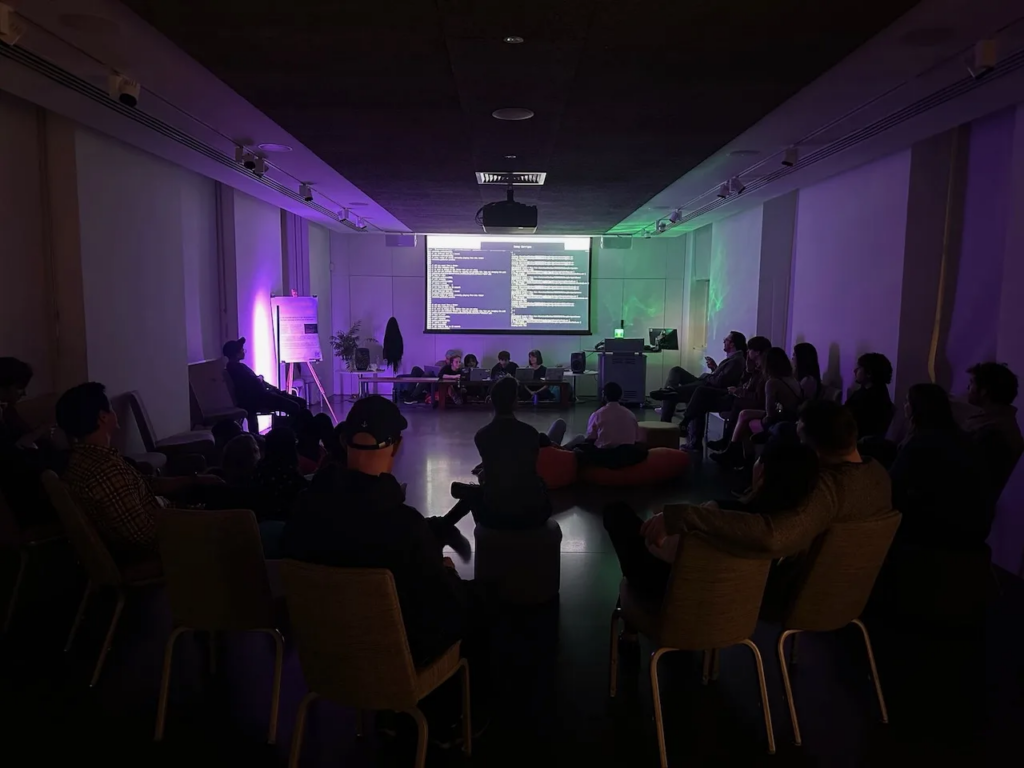
This hands-on workshop explores soundscaping as a method for reconsidering, situating and pluralising wildfires in society and culture. It explores the politics, possibilities and limits of listening across these different kinds of networked sound materials. At the workshop we will explore different ways of sourcing, downloading and layering online sounds. We will explore free and open source software for editing and composing sounds. The workshop will provide a gentle introduction to using the command line and creative coding to recompose collections of audio materials. Drawing on the forestscapes project, we will explore together how layering and algorithmic recomposition can create unexpected resonances and ways of noticing. We will conclude with a collective listening session and reflection on how listening with patchy, ambiguous, and troubling materials might nourish other modes of attention and repertoires of response.
To prepare for the workshop, we’d ask participants to bring folders of wildfire sounds (e.g. field recordings, online sounds, links to sound collections). The more sounds – and the more different sounds – the better. Don’t worry if you don’t have any to hand though, just bring yourselves!
To make the most of the time at the workshop we’d also recommend installing audacity (https://www.audacityteam.org/) and supercollider (https://supercollider.github.io/) For those already familiar with the command line, we’d also recommend installing yt-dlp (https://github.com/yt-dlp/yt-dlp). You can find some of the scripts we’ll be working with here (https://codeberg.org/publicdatalab/forestscapes-supercollider).
Workshop 2: Creative Writing with Dr Victoria Leslie
-
Date: 22nd April 2026
-
Time: 9:30-12:30 (with lunch at 12:30)
-
Location: Melbourne House (KCL) (In-person or online)
About the Practitioner
Dr Victoria Leslie is a Research Fellow at the University of Greenwich whose work explores storytelling, place-writing and creative methods in environmental research. She has worked using arts-based research methods in projects including the UKRI-funded Diverse Marine Values programme (University of Portsmouth) and the WetlandLIFE project under the Valuing Nature programme (led by the University of Greenwich and funded by NERC, AHRC, SRC and DEFRA). She is a member of AALERT (Arts and Artists in Landscape and Environmental Research Today) and is also the author of the short story collection “Skein and Bone” (Undertow Books) and the novel “Bodies of Water” (Salt Publishing).
Workshop description
In this session, you’ll be invited to explore past, present, and future representations of fire in literature, and to reflect creatively on how fire is imagined, narrated, and understood. The workshop will combine short readings, discussion and practical creative writing exercises, introducing techniques you can take forward into your research and communication.
Workshop 3: Experimental Embroidery with Elnaz Yazdani
-
Date: 26th June 2026
-
Time: 13:00-16:00 (with lunch at 12:30)
-
Location: Melbourne House (KCL) (In-person only)
About the Practitioner
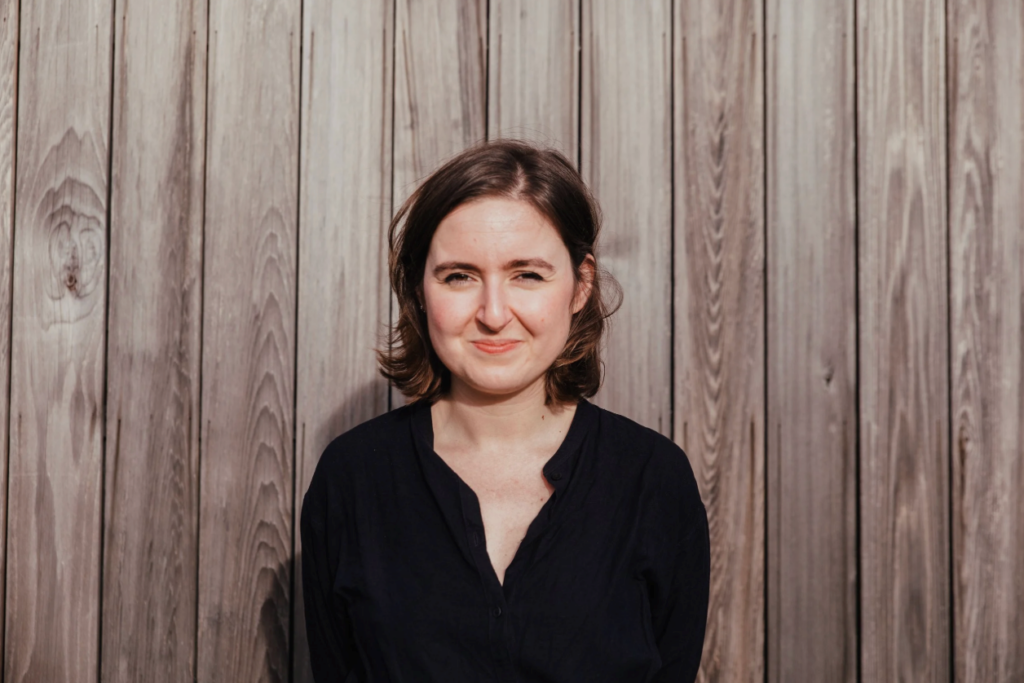
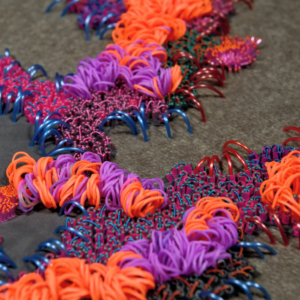
Elnaz Yazdani is an embroidery artist and educator based in Yorkshire, dedicated to sharing her textile skills and promoting the importance of embroidery as an art form for community wellbeing. In 2020 she was commended for the Teaching Excellence Award in Embroidery via the Embroiderers Guild, and in 2025 was awarded a Master of Arts by Research for a programme of work entitled ‘Rethinking Embroidery: Connecting, Embellishing and Transforming Communities Through Embroidery’. Her practice explores ways of transforming traditional embroidery techniques through unusual, industrial and upcycled materials.
Workshop description
This workshop offers a practical introduction to experimental hand embroidery, exploring how embroidery can be used as an artistic tool to express yourself, connect with others and improve wellbeing. The session will also examine how embroidery can serve as a methodology to engage communities and individuals in research projects, embellishing, transforming and connecting through stitch.
Further workshops will be arranged later in the year.
Please contact a.ford@imperial.ac.uk or mia.griffin23@imperial.ac.uk if you have any queries