
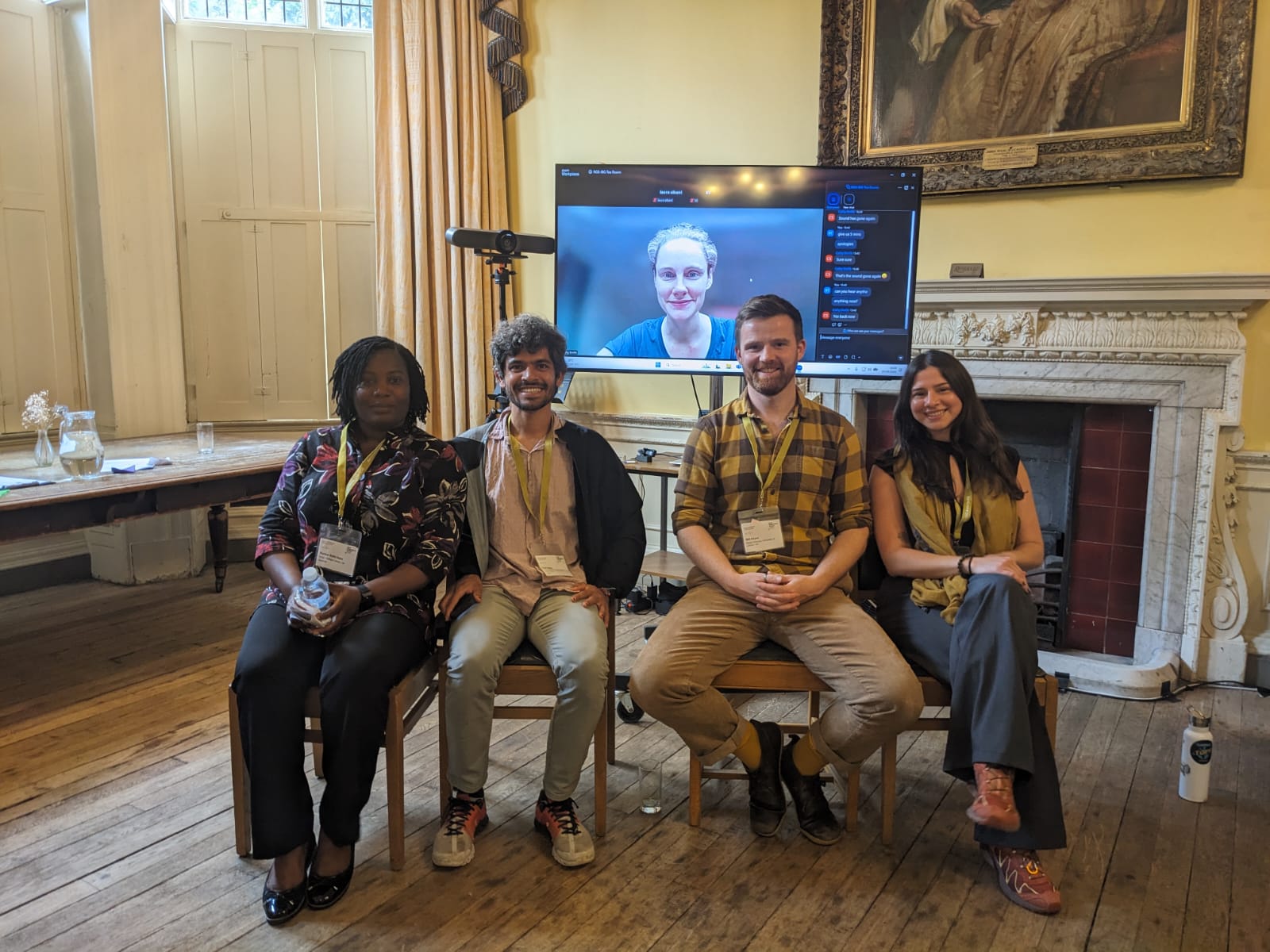
Five researchers from the Leverhulme Centre for Wildfires, Environment and Society presented their work at the Royal Geographical Society with IBG (RGS-IBG) Annual International Conference, held from 1–4 September 2026 across the Royal Geographical Society and Imperial College London.
Wildfires have become a symbol of the planetary ecological crisis. However, fire itself is not new. The history of humans and fire on Earth is deeply intertwined: humans are, after all, a fire-wielding species.
Across the world today, Indigenous and rural communities continue to use controlled burning for a range of purposes, from shifting cultivation and pastoral fire for grassland management to agricultural residue burning. What is changing, however, is the social and ecological context in which these practices take place. Alongside the rise of extreme wildfires, we are also witnessing transformations in longstanding practices of controlled burning, with important consequences for where, when and how fire is used. The boundary between controlled and uncontrolled fire can itself become blurred as landscapes and livelihoods change.
Climate change is an important part of this story, but it is not the whole story. Agrarian change also matters. Rather than a singular or uniform process, agrarian change encompasses a constellation of shifts in land use, labour, markets, household composition and rural demography. These transformations can alter both the reasons people use fire and their capacity to manage it.
These questions shaped a panel on ‘Rural Transformations and Fire’ at the RGS-IBG Annual International Conference 2026, bringing together research on fire in Ghana, India, Spain, Scotland and Ireland. Although these places differ considerably in their landscapes, histories and forms of rural production, the presentations highlighted the importance of understanding fire in relation to broader transformations in rural life.
Five members of the Wildfires Centre contributed to the panel, presenting research from across these different geographical contexts:
- Wolf Hayes (Royal Holloway) – Living with change in Ireland’s uplands: land, livelihoods and rural futures
- Kapil Yadav (Royal Holloway) – Agrarianising the forest fire crisis: rethinking forest fires from grassroots in the Uttarakhand Himalaya
- Cathy Smith (Royal Holloway) – Common grazings aflame: crofting, muirburn and rural transformation in Scotland
- Rahina Alare (King’s College London) – Shifting flames: the relative role of agrarian change and fire governance in northern Ghana
- Monika Moreu Vicente (King’s College London) – Rural transformation and emerging fire governance challenges in depopulated Spain: insights from the Serranía de Cuenca
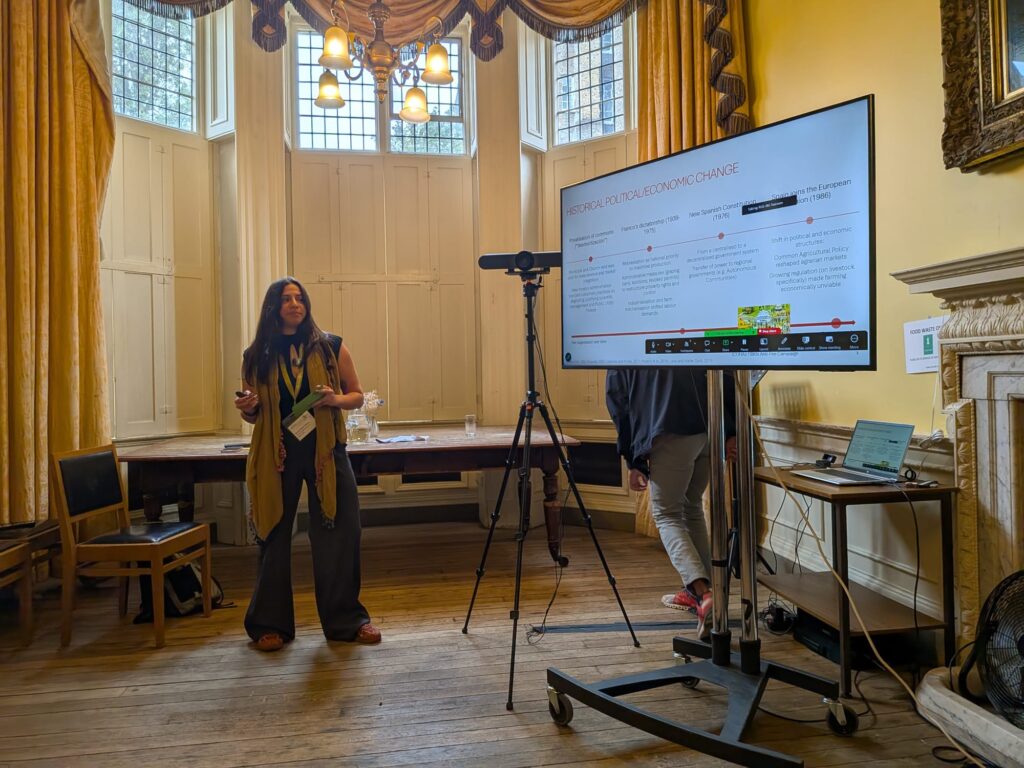
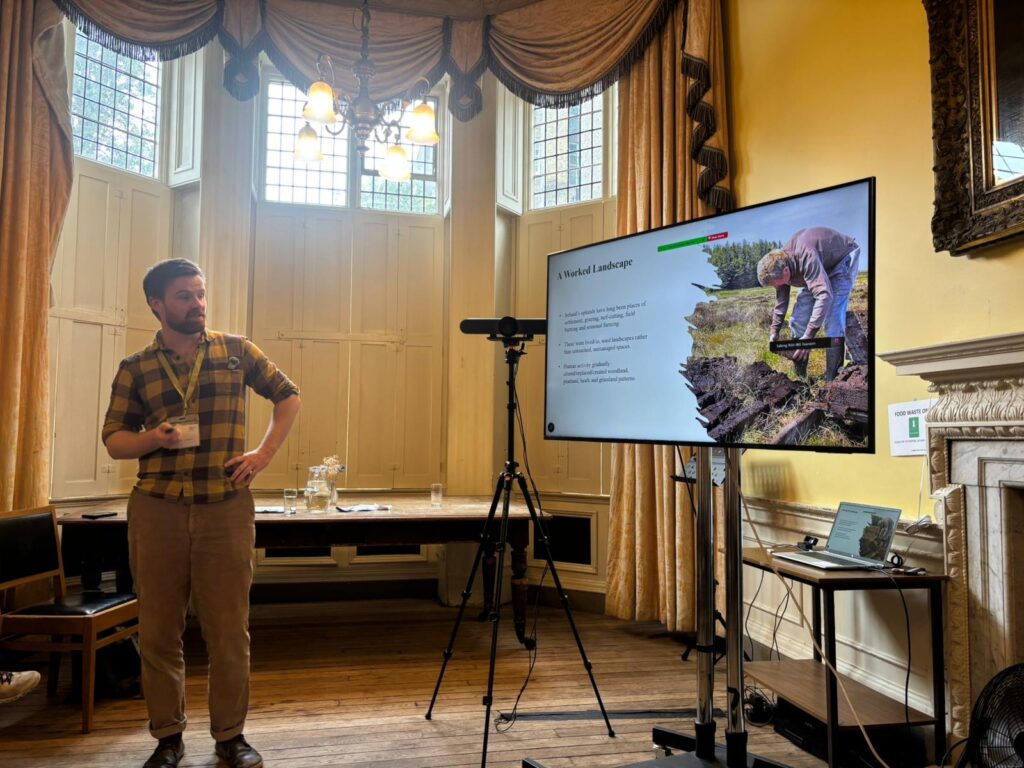
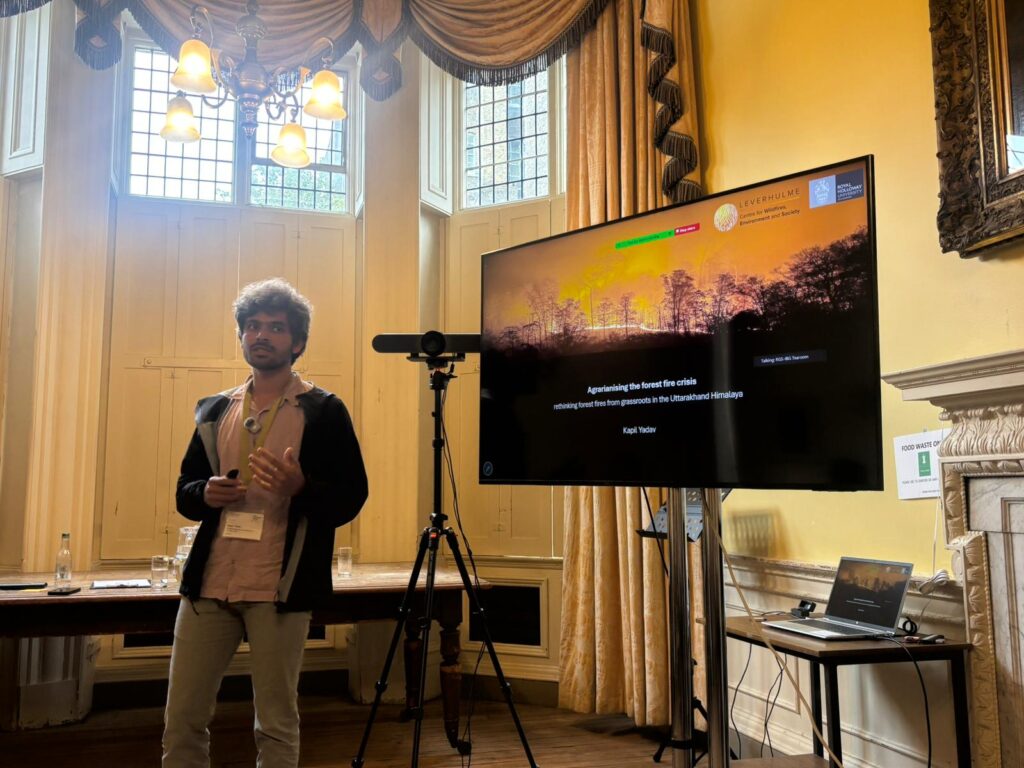
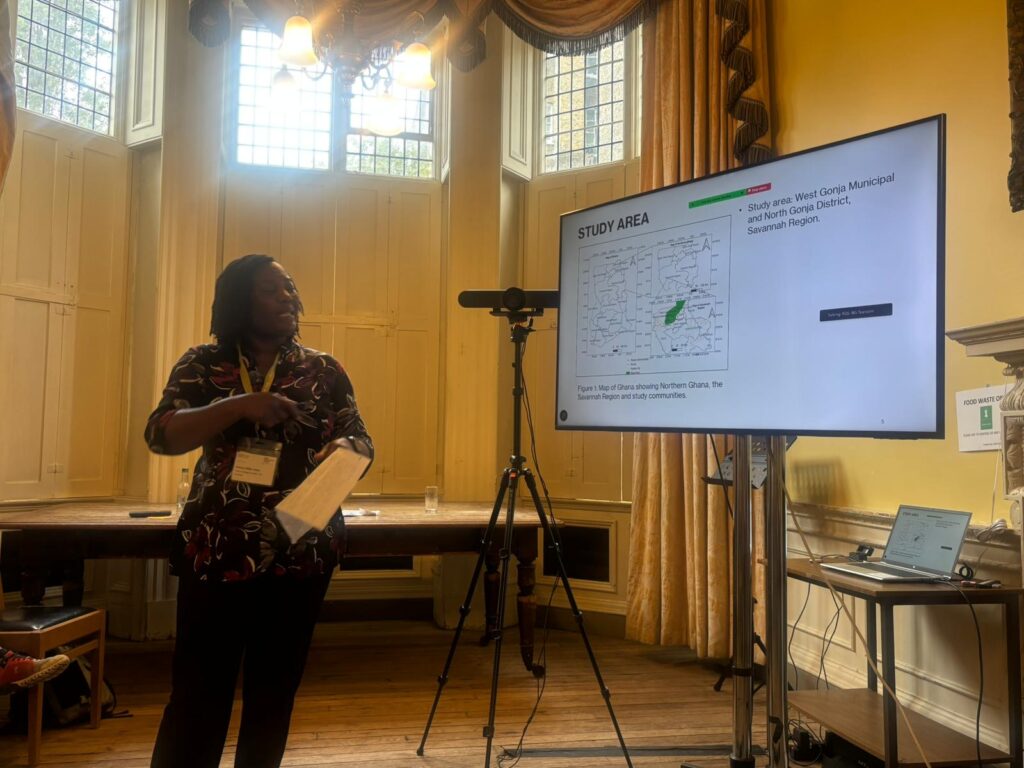
The Wildfires team presenting at the RGS IBG annual international conference. Photos credits: Will Hayes, Reetika Revathy Subramanian and Kapil Yadav
Looking at fire through the lens of agrarian change asks us to move beyond treating fire simply as a hazard or an environmental process, and instead to consider how changing livelihoods, labour relations, land-use practices and rural populations are reshaping relationships with fire.
This perspective is particularly important because fire practices do not exist in isolation: they are embedded in systems of production and social reproduction, and change as those systems change. A decline in agricultural labour, shifts in pastoralism, changing patterns of land ownership, rural out-migration or the expansion of new forms of land use can all transform how landscapes are managed and how fire moves through them.
Bringing these questions together across different geographical contexts, the panel highlighted the value of viewing fire not simply as something that happens to rural landscapes, but as intimately connected to how those landscapes – and the lives and livelihoods within them – are being transformed.
By Kapil Yadav