
By Rahina Sidiki Alare
King’s College London | Leverhulme Centre for Wildfires, Environment and Society
My research on fire governance in Northern Ghana has centred on a question that is increasingly important across Africa: how can fires be managed in ways that are both effective and equitable, while recognising the people, knowledge and institutions that shape fire use and management?
Credit: PENHA Ethiopia
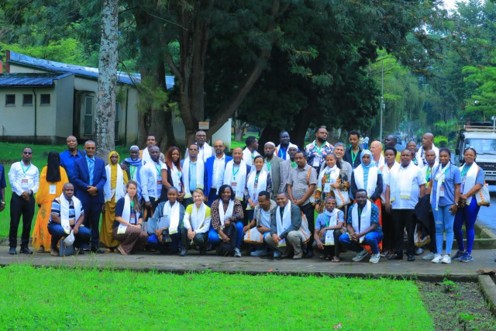
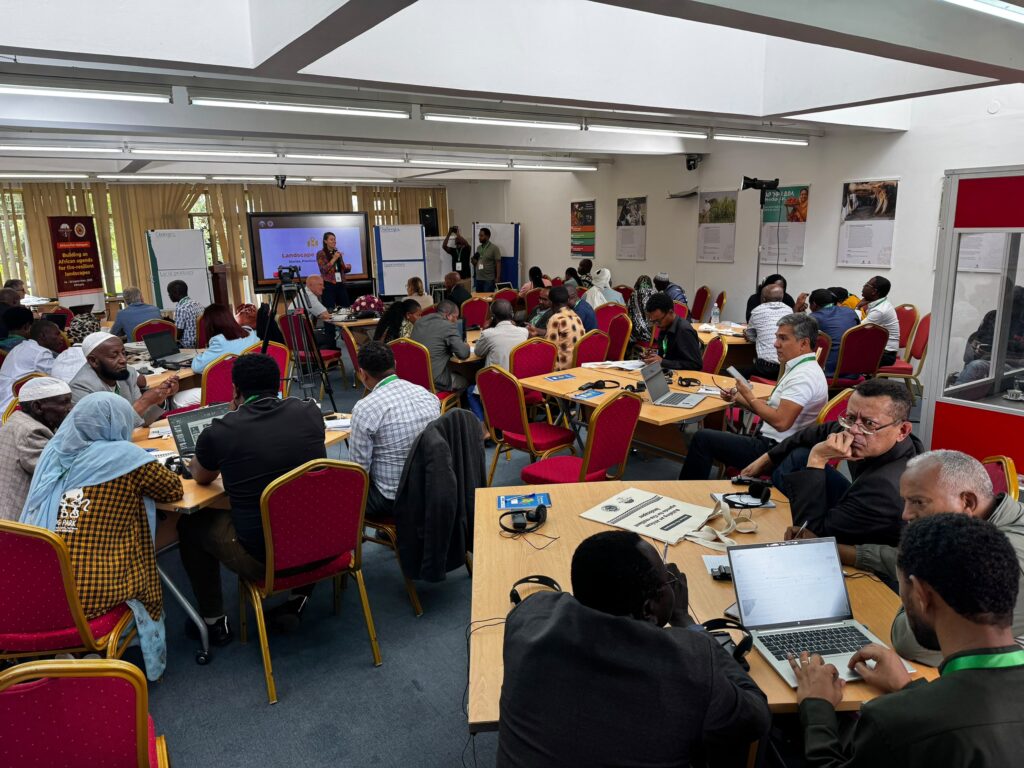
My participation in the African Fire Dialogue, held in Ethiopia from 14–18 September 2026, provided an opportunity to take these questions beyond Northern Ghana and engage with experiences from across Africa and beyond. Over five days, researchers, government representatives, Indigenous Peoples and local communities, traditional authorities, civil society organisations and practitioners came together to explore how wildfire prevention and fire-resilient landscapes can be strengthened.
For me, the central message was clear: building fire-resilient landscapes requires more than responding to fires. It requires recognising people as central actors in fire governance and creating the conditions that enable them to participate, act and benefit.
Listening to landscapes
Credit: Sarafina Ponea.
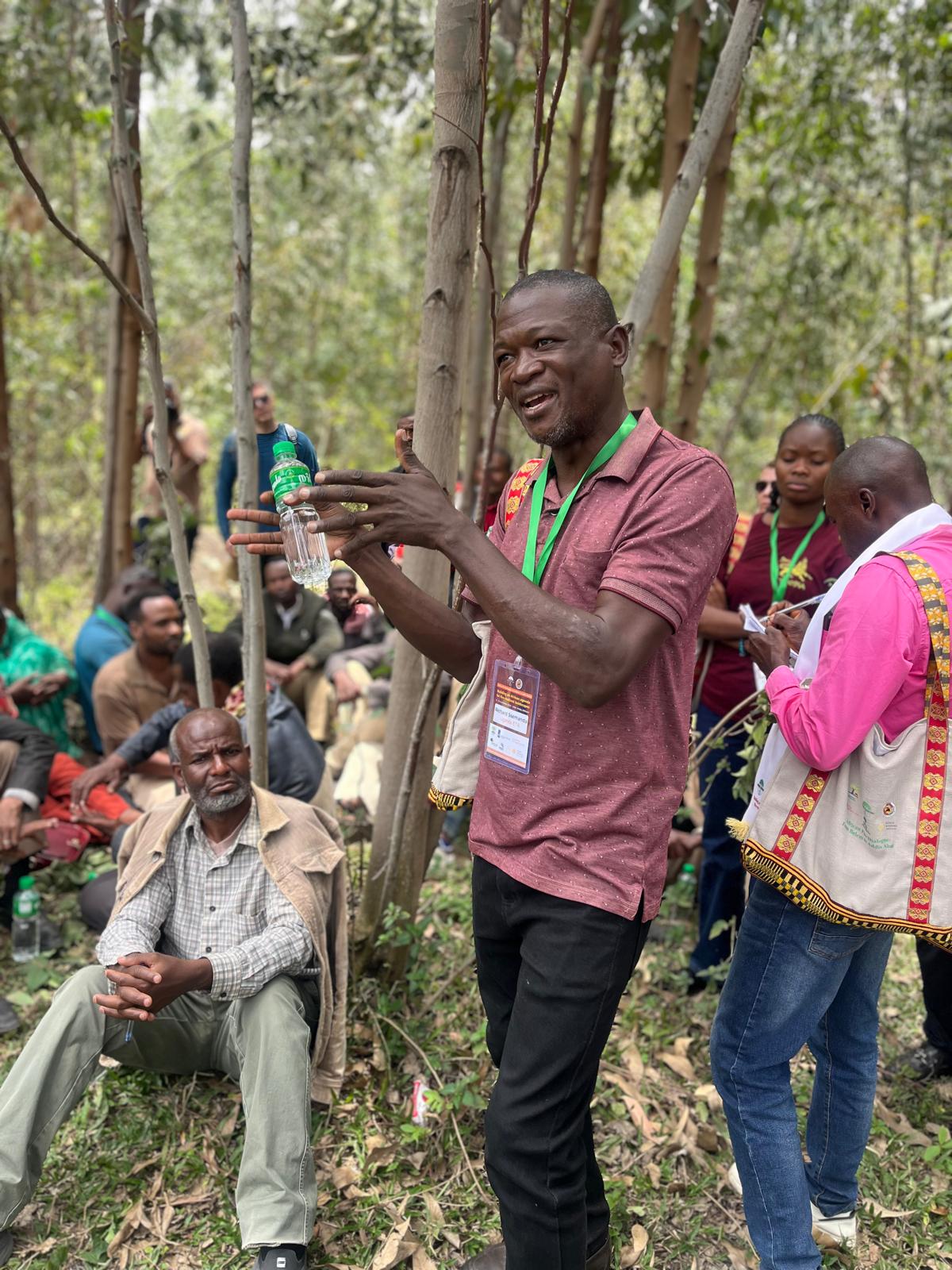
A landscape exchange brought together representatives of Indigenous Peoples and local communities from Ethiopia, Ghana, Uganda, the Democratic Republic of Congo, Tanzania and Bolivia. Their experiences differed, but common challenges emerged, including rising temperatures, prolonged drought, pressures on livelihoods and increasing risks to ecosystems.
Importantly, communities were not speaking only about problems. They also shared practices already being used to reduce fire risk, including controlled early burning, firebreaks, local monitoring, early warning systems and knowledge transmitted between generations.
These experiences raised important practical questions. What happens when an early warning is reported? How can young people who are closest to the fire be meaningfully incentivised to engage in firefighting when they may not own the resource at risk? And how do we manage fire across administrative boundaries when fire itself does not recognise them?
Having information about fire is not enough. There must also be institutions, resources, relationships and people with the authority and capacity to act.
Seeing fire management in the landscape
Credit: Sarafina Ponea.
On the second day, we travelled from Addis Ababa to Hawassa and Wondo-Genet College of Forestry and Natural Resources at Hawassa University. Here, discussions about fire governance became much more tangible.
We heard about two decades of Ethiopian fire records and some of the local approaches being used to manage fire, from community patrols and firebreaks to customary rules, sanctions and prescribed burning.
What stood out was that communities are not starting from zero. They already possess knowledge, practices and institutions through which fire is understood and managed. The challenge, therefore, is not simply to introduce new approaches to communities, but to consider the policy, institutional and financial conditions that enable existing knowledge and practices to contribute to safer and more resilient landscapes.
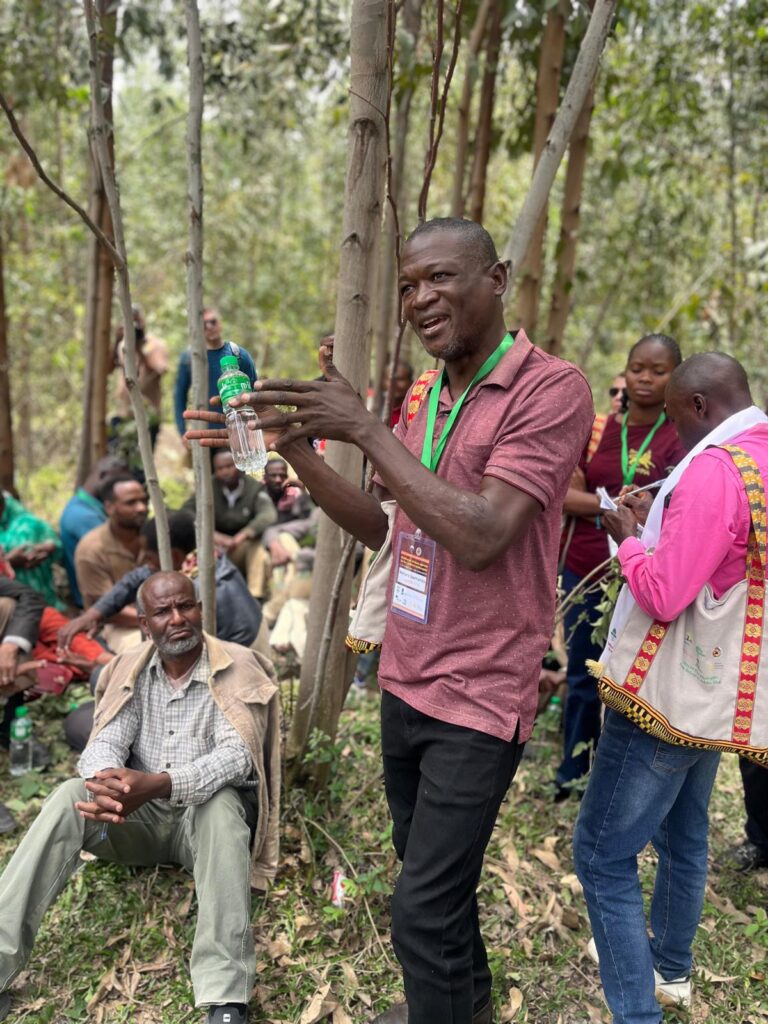
Photo credit: Rosalien Jezeer
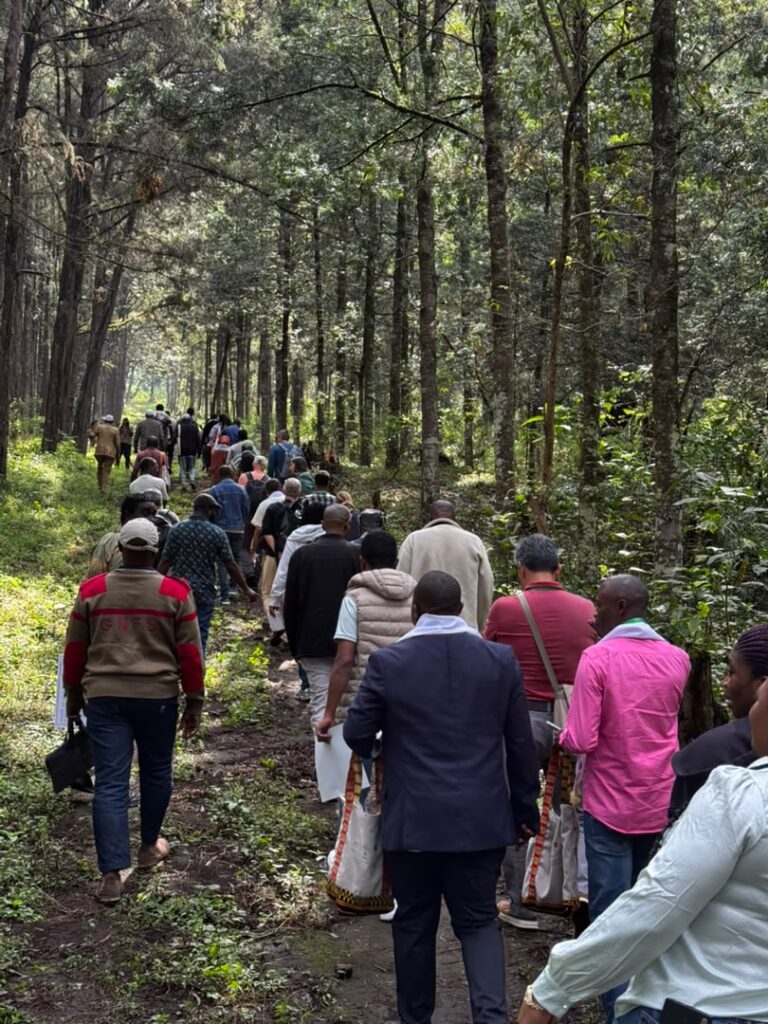
A field visit around Wondo-Genet brought this into even sharper focus. We walked through pine plantations surrounded by natural vegetation, shrublands and grasslands, visited a fire lookout tower and followed firebreaks cut into the mountainside. Most importantly, we met communities living alongside the forest and saw how residents mobilise to establish and maintain firebreaks, often by hand, to protect farmland and homes.
Seeing this work taking place in the landscape reinforced my own findings from Ghana that fire management is inseparable from the ways people use, value and interact with landscapes. It is not simply about putting out fires or preventing them from occurring. It is also about understanding why people use fire, the roles different actors play in managing it, and the institutions and resources that shape what forms of management are possible.
This has important implications for approaches centred on prohibition and punishment. Where people depend on fire for livelihoods and landscape management, simply prohibiting its use does not necessarily eliminate burning. It can instead push traditional fire practices underground, making them harder to monitor and potentially increasing the risk of poorly timed or uncontrolled fires.
Moving from dialogue to action
As the Dialogue progressed, discussions shifted from understanding these challenges towards a more practical question: what needs to change, who needs to act, and what conditions are necessary to make inclusive fire management possible at scale?
Participants identified six broad priorities: community capacity and stewardship; livelihood security and sustainable incentives; enabling governance and accountable law enforcement; prevention, early warning and action; equipment, technology and fire intelligence; and sustainable finance.
But identifying priorities is only a starting point. The next question is who has the responsibility, resources and influence to make them happen.
The discussions reinforced that scaling inclusive fire governance cannot be left to communities alone. Communities have essential knowledge, experience and responsibilities, but governments, research institutions, civil society, finance actors, private-sector organisations and regional institutions all have distinct roles to play.
For me, this was an important point of connection with my research in Northern Ghana. The question is not simply whether communities use fire, but how their knowledge and practices are recognised, which forms of fire use are considered legitimate, and who has the authority to shape fire management. These questions are central to developing approaches to integrated fire management that are both effective and equitable.
From local landscapes to the international fire agenda
The final discussions placed these priorities within the wider international climate, restoration and forest agenda.
The Dialogue considered the Call to Action for Integrated Fire Management emerging from COP30 in Belém and the need to move from political recognition of fire as an issue towards implementation on the ground. Looking ahead to COP31 in Türkiye and COP32 in Ethiopia, there is an opportunity to connect fire more closely with climate adaptation, landscape restoration, biodiversity, forests and livelihoods.
For me, one of the most important aspects of the Dialogue was the opportunity to connect these global conversations with experiences from African landscapes. There is a risk that international discussions about wildfire can be dominated by particular models of fire management, technologies or experiences from elsewhere. The Dialogue offered an alternative: starting with the realities of African landscapes and the experiences of the people who live and work within them.
There is no single model of integrated fire management that can simply be transferred from one landscape to another. Effective approaches need to be grounded in local ecological conditions, livelihoods, institutions and histories. This does not mean that scientific knowledge, technologies or formal institutions are unimportant. Rather, the challenge is to consider how different forms of knowledge and expertise can work together.
The discussions in Ethiopia reinforced a central premise of my research: equitable fire management requires more than recognising communities as stakeholders. It requires governance arrangements that recognise their knowledge and agency, create meaningful opportunities for participation, and consider the livelihoods and power relations that shape how fire is understood and managed.
Moving from dialogue to action therefore means more than acting on communities’ behalf. It means creating the conditions for communities to directly help shape the future of the landscapes they know and manage.